05/04/2006

Chocolate Chip Applesauce Cake

Chocolate chip applesauce cake
chocolate chip applesauce cake
Makes about 24 squares, serves 6-8 as dessert

Ingredients:
125ml (½ cup) oil
2 eggs
250g (1 1/4 cups) sugar
250g (2 cups) flour (plain, or half wholewheat)
500ml (2 cups) applesauce
½ tsp salt
1½ tsp baking soda
3 tblsp unsweetened cocoa

Topping:
150g (1 cup) chocolate chips
2 tblsp sugar

Method:
Mix the oil, sugar and eggs with a wooden spoon in a large bowl. Add all the other ingredients except those for the topping, and mix until blended. Pour into a greased ovenproof dish, approx 22x32 cm (9x13 inch). Sprinkle on the topping, then bake at about 180C (350F) for 35-40 mins. When ready, the cake will be firm but not burned and the topping will make a light sugary crust. When cool, cut into squares.

- - - - - - - - - - - - - - - - - - - - - - - - - - - - - - - - - - - - - - - -

This is a simple dessert or cake which can be mixed in a few minutes. Although the quantities are given in grams, this is very easy to make using American cups. If you don't have a set of measuring cups, you can approximate with any mug or glass that holds 250ml liquid. We use olive oil and dairy-free chocolate chips, which makes this suitable for those on a dairy-free diet.

I was given the US version of this recipe by a friend in Chicago, many years ago, and have used it frequently in the USA, UK and now Cyprus. It's fairly low in fat, other than the chocolate chips. The original had one and a half cups of sugar in the main cake, but we found that a bit too sweet so I reduced it little. You might find just 200g (one cup) is sufficient - but don't reduce it too much as the sugar is needed to make the consistency right. The sweetness partly depends on the sweetness of the apple sauce. I make my own from raw apples, which can vary in sweetness. If you use cooked apple purée, and don't sweeten it, you may find that you need more sugar in the cake.

Chocolate chip applesauce cake can be eaten alone as cake, or with thick yogurt or ice cream as a dessert. It freezes well.

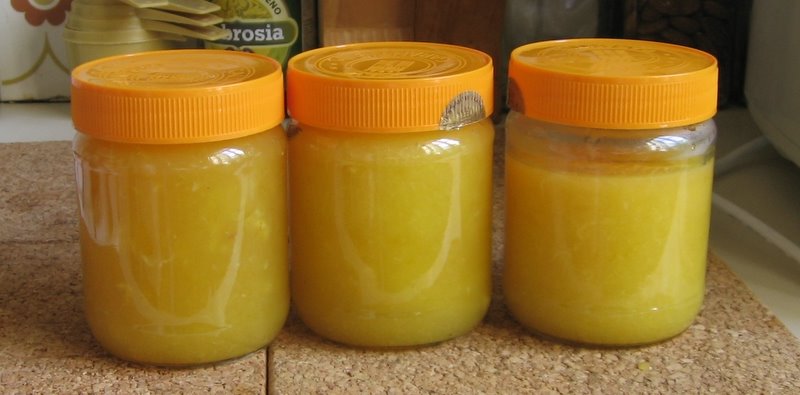
Lemon Curd

(To make about 1kg (2lb) lemon curd)

4-6 medium lemons: squeeze the juice and finely grate the yellow part of the rind
100g (about 4 ounces) unsalted butter 
450g (about 2 cups) sugar
4 largish eggs (or 6 small), beaten

Method:

Mix together the lemon rind and juice, then put with the butter and sugar in a tall pyrex or other suitable container, uncovered. There should be about 300ml lemon juice altogether, although it doesn't matter if there's a little less. If the lemons are very juicy and there is more than this, the result will be quite runny.

Microwave on full (high) for about four minutes, stirring after two minutes. Stir well to dissolve the sugar fully, and make sure the butter is completely melted. Microwave a little longer if necessary.

Add the beaten eggs, stirring in thoroughly. Microwave for a further five to six minutes, stirring well after every minute, until the mixture is thick and creamy. Do not over-cook - stop when it thickens and give a final stir.

Cool slightly, then put in clean, warm jars with lids. Refrigerate when cold.


Note: ensure the mixture comes less than half-way up the sides of your microwave container, or it will boil over! If you don't have a large enough jug, you can make it in two halves.

------

Lemon curd is a sweet preserve, used like jam on bread and butter, toast, or muffins (the English variety!) It's also good spooned into little pastry cases and baked in the oven. In some places it's known as 'lemon butter' - but this can cause confusion as lemon butter may also be a savoury, salty spread.

Lemon curd used to be time-consuming to make, needing a large pan of simmering water over a low heat, stirring constantly in a heatproof bowl. But with a microwave oven, it becomes quick and easy. It's best kept refrigerated and used within a couple of months.

I have experimented with dairy-free versions of lemon curd.  Simply substituting dairy-free spread does not work, as it makes the mixture too runny. However I have had some success with using half dairy-free spread and half refined (odour-free) coconut oil, since that solidifies even more than butter when refrigerated. Regular coconut oil gives it a strange flavour. 

A fully vegan version can be made with the zest from 4-6 lemons, 6 tbsp cornflour, 140ml water, 400g sugar, 240ml lemon juice120ml dairy-free milk, 60g dairy-free spread and 60g odour-free coconut oil. This is easier in a pan than in the microwave, as it requires making a paste with the cornflour, sugar and water which is gradually whisked in to make a paste.  Then the lemon juice is added and it needs to be brought to the boil, stirring constantly as it thickens. After that the fats and milk must be gradually stirred in until well-combined, and then the mixture poured into sterilised warm jars. If it looks too pale, about a quarter teaspoon of turmeric can be stirred in without affecting the flavour. 

20/03/2006

Lasagne

(serves 4-6)

1 packet lasagne pasta

Meat sauce:
500g/1lb minced beef (or other ground meat)
2 medium onions, chopped
1-2 garlic cloves, crushed, or 1tsp garlic powder
125g/4 oz mushrooms, chopped
1 tsp basil
1 tsp oregano
1 tblsp parsley
1 large can chopped tomatoes in puree
or: 1 medium can chopped tomatoes and 1 medium packet tomato puree or sauce

Cheese sauce:
2 tblsp butter or margarine
1 tblsp flour
about 300ml / 2 cups milk
about 200g / 6 oz cheddar cheese, grated

Method:
If the lasagne pasta require pre-cooking, boil a large pan of slightly salted water and add a few drops of cooking oil. (This stops the pasta sticking). Check the packet for the quantity required for 4-6 people, then add the pasta one sheet at a time, and boil for the time recommended on the packet. Drain.

Meanwhile, fry the meat gently in a large non-stick pan, stirring all the time. You shouldn't need to add any fat as it will produce its own, unless you have very low-fat mince. Add the onions, garlic and mushrooms when the fat starts to appear, and fry with the meat, stirring constantly until softened and the meat is browned all over.

Add the rest of the meat ingredients and heat, stirring, until simmering. Boil gently for about ten minutes, adding a little water if it seems to thicken too fast. Those outside the USA and Canada can add a teaspoon of Marmite or Vegemite at this stage, for added flavour and nutrition. (These products are not generally available in North America).

While the meat is simmering, put the butter in a large microwavable jug, or a non-stick saucepan, and heat until just melted. Stir in the flour with a wooden spoon, and cook for a further 30 seconds. Add the milk very gradually, stirring after each addition, so that no lumps appear. If you are using a saucepan over the stove, keep the pan on the stove on a low heat while you add each bit of milk, and stir all the time as you bring it to the boil. It should thicken to give a pouring sauce. If you are using a microwave, add all the milk gradually, then cook on High for a minute at a time, stirring well after each minute, until the sauce is thickened. Add half of the grated cheese.

Now take a large rectangular lasagne dish or similar, and grease it lightly with a butter wrapper. Spoon a very small amount of the meat sauce into the bottom, then cover with a layer of lasagne pasta, cutting as necessary to fit. Cover with another thin layer of meat, and then another layer of pasta, and continue until both are used up, ending with a layer of pasta. Pour the cheese sauce over the top, and then sprinkle the rest of the grated cheese on top. Place in a medium oven and cook for about half an hour, until the cheese is well melted and the meat bubbling. (If you use pasta which requires no pre-cooking, you may need to cook for longer - check on the packet).

- - - - - - - - - - - - - - - - - - - - - - - - - - - - - - - - - - - - - - - - - - - - - - - - - - - -

This is my most basic recipe for lasagne. It sounds complicated but is much easier than it sounds, particularly if you use a microwave for the cheese sauce. You can use any kind of minced meat - or vegetarian mince - and adapt the herbs to suit your family's tastes. For speed, use lasagne pasta that does not require any pre-cooking.

The same meat sauce is good by itself with spaghetti, topped with parmesan or grated cheddar cheese for a quick meal. Either way, it's good served with buttered french bread, or garlic bread, and mixed green salad or cooked vegetables.

If you particularly like cheese sauce, and don't mind the extra fat, make twice as much and then pour half of it over the second layer of meat. If you're cutting down on dairy products, you can use soya milk and goat's cheese, although you might want less of the cheese!

For a low-fat version of this meal, use half-fat cheese, low-fat chicken or vegetarian mince, and low-fat margarine. You can add in finely chopped peppers and/or carrots to increase nutritive value.

For a very quick version (although it won't taste as good), use a large jar of spaghetti sauce, lasagne pasta that does not require pre-cooking, and ready-made cheese sauce. Put together as described and top with grated cheese, then cook in the oven for the time recommended on the pasta packet.

15/03/2006

Enchiladas

(serves about 4 people)

8 flour tortillas

1 tblsp olive oil

250g (1/2lb) minced beef or other ground meat
OR 150g frozen spinach, thawed and drained

400g can pinto or black beans, drained
OR equivalent cooked dried beans (any kind)

1-2 onions, chopped
2-3 clove garlic, crushed
1 bell pepper, chopped
1 teaspoon cumin seeds
¼-½ teaspoon chili powder
1 medium can (about 1 cup) tomato puree, fresh or processed
100g (4 oz) grated cheese (about 1 cup when grated)

Method:
Gently stir-fry the onions and garlic in the oil, until almost translucent. Add the chopped pepper with the cumin and chili powder, and stir for a minute, then add the mince, if used, and mix in over the heat until cooked.

Add in the beans and mix well, crushing a few of them, and then the spinach, if used. Simmer together for about ten minutes, stirring occasionally, until well-mixed without any extraneous liquid.

For each tortilla, put a generous heaped tablespoon of the mixture lengthways in the centre. Roll up and place in a greased or non-stick dish with the end of the roll at the bottom. Repeat for all the other tortillas, using up all the meat or spinach mixture. They should fit fairly tightly in the dish, so the enchiladas do not unroll.

Cover with the tomato puree or sauce, and then top with grated cheese. Put in a hot oven (about 180C) for about 15-20 minutes until the cheese is melted and the enchiladas heated thoroughly.

- - - - - - - - - - - - - - - - - - - - - - - - - - - - - - - - - - - - - - - -

If you do not want to use ready-made tortillas, you can make your own wheat tortilla wraps; they are a bit time-consuming, but worth the effort. If you make the dough before starting the enchiladas, you can then roll them while the meat or spinach mixture is simmering, and then remove that from the heat while you cook the tortillas.

There are many variations on this basic enchilada recipe. Adjust the chili powder to taste, of course. You can use cooked lentils in place of the mince or spinach if you prefer, or you can can add some tomato sauce into the cooked mixture. If you have some leftover bolognese or chili con carne, either meat-based or vegetarian, you can use those in place of the filling. If you have leftover vegetables in the fridge, they can mix in too.

You can make a simple tomato sauce by taking about 800g fresh tomatoes, roughly chopped, or the contents of two 400g cans of tomatoes, and simmering with a little chili powder and garlic until well reduced. At the other extreme, you could use a jar of ready-made pasta sauce instead of tomato puree over the enchiladas before topping with cheese. As with any recipe, it's best to adapt to your family's tastes, whatever they are.

This is good to serve with a green salad, sweetcorn and tzatsiki, or with stir-fried cabbage and peas.

13/03/2006

Quiche

(To serve 2-3 people)

200g flour
100g margarine
cold water to mix

1 onion, sliced
olive oil
few mushrooms, sliced (optional)
50g cheese, thinly sliced
3 medium eggs
200ml milk (regular or soya)

Method:
For the pastry: rub the margarine into the flour with fingertips until the mixture resembles breadcrumbs (or use a food processor). Add a small amount of cold water (preferably refrigerated) and mix with a knife until it goes together roughly. With floured hands, gather together into a ball and knead for a few seconds. If possible, put in the fridge for half an hour to rest, but this isn't necessary.

Roll the pastry out on a floured work surface using a floured rolling pin, until it's the right size for a large quiche dish or pie plate (or two smaller ones). Line the dish with the pastry and trim the edges.

For the filling: cook the onions (and mushrooms, if used) gently in the oil, in a saucepan on the stove or in the microwave, until the onions are soft. Spread them over the pastry. Put the sliced cheese on top.

Beat the eggs lightly with a fork, then stir in the milk. Pour over the top of the cheese and cook at about 200C (400F) for half an hour or a bit longer, until firm, risen, and slightly brown on the top.

- - - - - - - - - - - - - - - - - - - - - - - - - - - - - - - - - - - - - - - - - - - - - - - - - - - -

We usually just serve this with some vegetables, such as broccoli or stir-fried courgettes, and it serves two hearty appetites. For three (or even four) people it could be served with baked potatoes and more veg. Alternatively it's very good eaten cold with a salad. Sometime we double the recipe so as to have some cold for the next day!

I usually use 50g wholewheat flour with 150g plain flour in the pastry. This gives a slightly crunchier texture and is of course more healthful than using just white flour. Any sort of margarine can be used (we ensure we use one without hydrogenated fats). Indeed, any other pastry recipe could be substituted, or even shop-bought frozen pastry, thawed.

13/02/2006

Marinated Chicken

(serves about 3-4)

approx 450g (1lb) boneless chicken, cubed
½ cup fresh lemon juice
¼ cup soy sauce
¼ cup Dijon mustard
2 tsp vegetable oil
¼ tsp cayenne pepper

Method:
Mix the sauce ingredients to make a marinade. Put the chicken pieces in a bowl or dish and pour the marinade over it, then refrigerate. This should ideally be for about six hours, turning every hour or so to re-coat, but it still works if you forget to do this earlier in the day, and only leave it for half an hour or so!

To serve, either cook directly in the oven, covered, for about 30-40 minutes at a fairly high temperature, or remove from the marinade and barbecue or grill (US: broil), turning frequently. You can heat the marinade in a small pan, or in the microwave, and serve over the meat. Do ensure that you cook this thoroughly, so that it boils, as it has been used to marinade raw poultry!

- - - - - - - - - - - - - - - - - - - - - - - - - - - - - - - - - - - - - - - - - - - - - - - - - - - -

This recipe can be used with skinless boneless chicken or turkey breast, and also works well with chicken kebabs, which you can sometimes buy ready-threaded on skewers. The amount of meat to use depends on family appetite and preference: we find that about 400-500g of raw meat is right for 3-4 people, but it's better to cook too much the first time, and freeze anything left over, than to have too little.

If you leave (or thread) your meat onto kebab skewers, this is easy to serve in warmed pittas with mixed salad and coleslaw. Alternatively serve with any kind of potatoes and vegetables. We like this with oven-cooked potato wedges, corn and french beans.

If you have a vegetarian in the family, you could serve something like halloumi cheese fried in olive oil at the same time, paticularly if you are eating this as a quick meal with pitta bread and salad.

Note: a 'cup' measure is 8 fluid ounces. You may be able to buy sets of American measuring cups to make this easier, or use a jug with measurements. Alternatively you could just guess, using an ordinary cup or mug. The exact quantities do not matter and can be adjusted to taste.

09/02/2006

Pineapple Chocolate Fudge Pie

(serves 3-4)

Base:
100g digestive biscuits (US: graham crackers), crumbled
25g coconut (optional)
75g butter or margarine, melted

Filling:
100g butter or margarine
75g soft brown sugar
150g plain flour
1.5 tsp baking powder
25g cocoa powder
225g can pineapple slices or chunks
50ml milk, approx


Method:
Make the base by mixing crumbs (and coconut if used) into melted butter, and pressing into a greased 20cm/8 inch flan dish or pie plate. Cook at 190C/Gas 5 for 5 minutes, and remove from oven.

Meanwhile, cream the butter and sugar, then stir in all the dry ingredients alternatively with milk and the juice from the pineapple. Arrange the pineapple pieces in the crumb base, then spoon the topping over them. Cook for about 30 minutes at 170C/Gas 4, until the top is firm to touch. The inside should still be slightly gooey but not sufficiently that it will collapse.

- - - - - - - - - - - - - - - - - - - - - - - - - - - - - - - - - - - - - - - -

Here's a close-up showing how it looks after a few pieces have been cut, showing the softer inside:

We sometimes make this dessert for a special occasion, and serve with thick yogurt or ice cream. It works well if you double all quantities, to serve six to eight people; use a 28-30cm round flan dish if you do so.

To convert to imperial measurements, treat 25g as approximately 1 ounce (or a little under). To make it suitable for dairy-free eating, use soya milk instead of ordinary milk, and dairy-free spreads such as Pure soya or Flora dairy-free instead of butter.

Newest recipe

Beetroot salad

Ingredients: 250g cooked beetroot (NOT in vinegar) 50g walnuts  50g raisins 2 garlic cloves, crushed 1 tblsp mayonnaise 1 tblsp vegan yogurt...