Showing posts with label Preserve. Show all posts

21/01/2026

Sweet chili sauce

Makes around 240ml

home-made sweet chili sauce
Ingredients:
2-3 small red chilies or 1 bigger
2-3 garlic cloves
90ml water
30ml apple cider vinegar
50g sugar
3/4 tsp salt
1/4 tsp chili powder or flakes (optional)
1/2 tbsp cornflour
1 tbsp (15ml) water

Method:
Chop the chili peppers and garlic together in a small food processor. If you only have a blender, pulse until the pieces are very small but not puréed. 

04/06/2011

Tomato ketchup (using fresh tomatoes)

Tomato Ketchup
home-made tomato ketchupMakes about 700-800ml ketchup (3 cups)

Ingredients:
about 1.5 - 1.7kg fresh tomatoes (US: 3 - 3 1/2 pounds)
1 large onion
4-6 garlic cloves
1 tsp paprika
1 tsp ground pepper
1 tsp turmeric
1/2 tsp mixed spice
2 tsp salt
30ml(1 tblsp) freshly squeezed lemon juice
80ml  vinegar - any kind (US: 1/3 cup)
75g sugar (US: 1/3 cup)

Method:
Roughly chop the tomatoes and place in a large saucepan - preferably stainless steel. Peel and dice the onions reasonably finely, then peel and chop or crush the garlic cloves. Add onions and garlic to the pan, along with the paprika, pepper, turmeric and mixed spice.

Put over a fairly gentle heat, and stir a few times as the tomatoes start to make their own juice. Simmer uncovered for about half an hour or so. Switch off the heat when the onions look translucent and very soft, and the mixture has reduced significantly. Prod the mixture a bit with a spoon, and if any of it still feels hard, simmer for another ten or fifteen minutes.

Leave to cool for at least half an hour - it can be considerably longer. Then use a blender - preferably a hand-held one, as it's a great deal simpler to blend in the pan than having to transfer the mixture gradually to a standard blender and then into a fresh saucepan - and liquidise thoroughly. This is very important - make sure all the onions and tomatoes are very well blended.

Now switch the heat on again, and return the pan to the stove. Add the last four ingredients - salt, lemon juice, vinegar and sugar - and stir until mixed. Then leave to simmer for another 30-45 minutes, stirring occasionally, until the desired consistency is reached. Note that as it thickens, the mixture will bubble quite violently - this is to be expected, but can be a bit messy, and if it splashes on a hand it's extremely hot.

Cool in the pan after it has thickened, then transfer to suitable covered containers and refrigerate. Keeps for at least two months in the fridge, or can be frozen if you want to keep some of it for longer.


- - - - - - - - - - - - - - - - - - - - - - - - - - - - - - - - - - - - - - - -

My inspiration for this recipe came from 'The Loving Path' ketchup recipe, a few months ago. I was fed up of the preservatives in supermarket ketchup, and we have readily available inexpensive fresh tomatoes all year round in Cyprus; I can often find about 3kg for only a euro. A few of them may be squashy, but that doesn't matter at all. (I cut and freeze the rest of the tomatoes in 400g portions, to replace canned tomatoes in other recipes.)

I adapted the recipe gradually, simplifying greatly - for instance, I saw no reason to sieve the mixture to remove the tomato skins, or - as some other recipes suggested - to blanch and skin them first. However, if you like your ketchup smoother than even the best blender can make them, you might want to consider one of those options.

I added turmeric to the spices since it's considered a modern health food, and removed some of the others from the recipe, not wanting it to be too highly spiced. I found my first batch of experimental ketchup tasted too much of cinnamon for my preferences - so I simplified still further. I'm sure many more variations are possible; if you don't like garlic, for instance, you could simply omit it. If you like hot spicy ketchup, try adding some cayenne or even chili powder.

I've found that sometimes I stop the final simmering before it's quite thick enough; this doesn't affect the taste, but means that the texture isn't exactly like commercial ketchup. However, the taste - in my opinion - is out of this world. It tastes, I believe, as all ketchup ought to taste. That bubbly simmering at the end can be quite messy, but it's well worth the effort.

14/11/2009

Tomato and Apple Chutney

Tomato and apple chutney
tomato and apple chutneyMakes 5-6 340g jars or around 2kg (US: 4 pounds):

Ingredients:
1kg apples (any kind), peeled, cored and finely chopped (US: 2lb)
1kg red tomatoes, sliced thinly or chopped (US: 2lb)
350g onions, peeled and chopped into small pieces (US: 3/4 lb)
3-5 cloves garlic, skinned and crushed
225g raisins or sultanas (US: 1/2 lb)
350g demerara sugar (US: 3/4 lb)
1 tblsp turmeric
1 tblsp curry powder
1 tsp cayenne pepper
2 tsp salt 
850 ml malt or wine vinegar (US: 3 1/2 cups)

Method:
Put the apples in the preserving pan first, with a little water, and stew gently to soften. No need to do this if the apples are soft already,but if you use cooking apples or hard ones such as Granny Smith, it's worth doing.

While they are stewing, prepare the tomatoes, onions and garlic. Add to the pan, stirring, then put in all the other ingredients. Bring to the boil, stirring. Reduce the heat, and simmer for about an hour and a half or a bit longer, until there is a thick consistency with no extra liquid.

Put in hot, sterile jars and cover with non-metal lids.


- - - - - - - - - - - - - - - - - - - - - - - - - - - - - - - - - - - - - - - -

I looked at many different recipes for chutneys, wanting to make some using a bag of inexpensive tomatoes and some spare apples. Some of them required the tomatoes to be skinned first; I didn't want that extra step. Some of them insisted on malt vinegar, but that's quite hard to find in Cyprus. Some of them used more complex spices, or spiced vinegar. Some used mustard seeds in a muslin bag, but I don't have a muslin bag. None of them was exactly what I wanted.

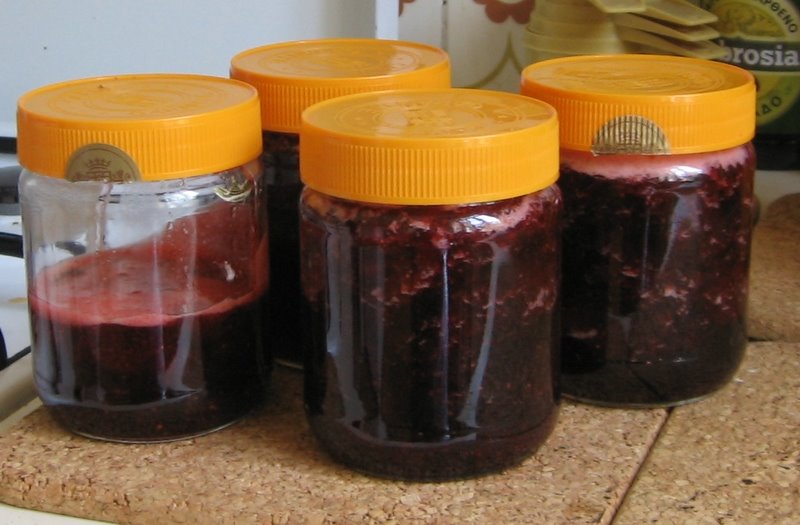
But gradually I realised that there was a theme to all the chutney recipes: fruit, dried fruit, sugar, spices and vinegar. So long as the vinegar is good quality, it doesn't really matter whether it's malt or wine. I used white wine vinegar, but if you prefer a deeper colour, brown malt vinegar or red wine vinegar is fine. So long as one doesn't mind the (very soft) pieces of skin in the eventual mixture, there's no need to skin the tomatoes. And the spices come in so many possible variations that anything can be left out.

So I based my recipe on one I found in my ancient Good Housekeeping book (the version from the late 1970s), adjusted to take account of all the above, and tried it. The pan looked most unappetising when it had pieces of tomato and apple floating around in it at first, but gradually it took on a deep orange/red hue, and started to look like chutney. The taste is amazing. It goes extremely well with bread and cheese.

07/11/2009

Mango and Apple Chutney


To make about five to six 340g jars (around 2kg):

2 onions
2 apples - either cooking apples (not too huge) or granny smith or similar
1.8kg ripe mangoes (about five medium)
3-5 garlic cloves
125g raisins
350g demerara sugar
1 tblsp ground ginger
1 tsp ground nutmeg
0.5 tsp salt
600ml malt vinegar

Method:
Peel and chop the onions fairly finely. Put in a preserving pan or other large heavy-based saucepan. Peel the apples, cut into quarters to remove the core, then chop and add to the pan.

Then prepare the mangoes. This can be a bit of a messy process. I found the easiest way was to make several deep cuts into the fruit, up to the large stone, then remove a wedge at a time. Chop the pieces of mango, easing away from the skin, and add into the pan.

Peel and crush the garlic cloves, and add them. Then put into the pan the raisins, sugar, spices (yes, it really is a whole tablespoon of dried ginger!), salt and vinegar. Heat, stirring lightly, until the mixture starts to boil, then turn the heat down and simmer for about an hour and a half, stirring occasionally.

In the last twenty minutes or so of the cooking, it's important to watch the chutney and keep stirring, so that it doesn't stick. When ready, the excess liquid should have evaporated and the mixture will be dark and pulpy.

Spoon into hot, sterile jars with plastic or plastic-lined lids.

Once opened, a jars should be kept in the fridge and finished within around a month. Excellent served with curries, or any cold meat.

- - - - - - - - - - - - - - - - - - - - - - - - - - - - - - - - - - - - - - - -

The ingredients for this recipe came from the new 'Good Housekeeping' cookery book, but the explanation is my own. I made this when I saw fresh mangoes in the supermarket, and realised it would be a great deal less expensive than buying ready-made jars of mango chutney, which are quite pricey.

Getting the mango flesh was decidedly messy; if anyone has a fool-proof and simple method of removing the peel and stone so it can be used, please let me know.

The taste isn't quite the same as commercial sweet mango chutney, but we liked it anyway.

17/05/2007

Apricot jam

(makes about four 340g jars)

1 kg apricots or loquats
225ml water
juice of 1 small lemon
1kg sugar


Method:
Wash the fruit, cut in half and remove the stones. Crack a few stones to remove the kernels and blanch them by dipping in boiling water so the skins come off. Put the apricots in a large pan with the water, lemon juice and blanched kernels, and simmer gently until the fruit is soft and reduced (about 20-30 minutes). Add the sugar, stir until dissolved, and boil rapidly for about 15 minutes or until setting point is reached, stirring occasionally. Pot in hot clean jars, and cover.

- - - - - - - - - - - - - - - - - - - - - - - - - - - - - - - - - - - - - - - - - - - - - - - -

Apricots are only in season for a short time, but can sometimes be found very inexpensively. They don't need to be top quality for making jam - they can be a bit under-ripe, or even a bit over-ripe, although it's not so easy to remove the stones if they are becoming squashy.

Do ensure the pan is big enough! When you've added the sugar, the mixture should not come more than half way up the sides of the pan, or it is likely to boil over. A jam-pan is ideal; you can then double or even triple the quantities.

To test for setting, let a few drops of the jam fall onto a cold saucer, and leave it for a minute until it's cold. Then gently blow on it, or press with your finger. If it begins to wrinkle, the jam is ready. If it still reacts like a liquid, it needs further cooking. Use a large wooden spoon and stir occasionally as it nears setting point - this may provoke extra-violent stirring (hence the need for a LONG spoon!) but this jam is liable to stick if you don't stir at all.

When it's ready, turn it off and wait until the jam has stopped boiling. Then using a small jug or scoop (rinsed in boiled water to sterilise), put the jam in hot jars. These can be heated in the oven at about 100C, or put in the microwave with a little water inside, and heated until the water boils. Do not let the jars get too hot or they will crack when the jam is poured in. But they will also crack if it's too cold!

You can use special jam covers, or jars with metal lids, but I prefer to use plastic screw-top lids. Rinse them in boiling water and shake to dry, then put on the jam as soon as it's in the jars, and tighten when the jam is cool. This makes an almost airtight seal, and I find the jam keeps for at least a year.

22/04/2006

Strawberry Jam

To make about 1kg (2lb) jam

1.15kg strawberries, hulled and washed
2 tblsp fresh lemon juice
1kg sugar

Method:
Place the strawberries in a jam-pan or other large saucepan, and chop lightly if they're big. Sprinkle the lemon juice over, then cook gently over a low heat for about 30 minutes until the fruit is very soft, stirring occasionally.

Add the sugar and stir with a wooden spoon until the sugar is fully dissolved, then turn up the heat and boil until the setting stage is reached, stirring occasionally - this takes around 15-20 minutes but depends partly on the temperature of the hob.

Leave to cool for about ten minutes, then put in hot clean jars and seal.


- - - - - - - - - - - - - - - - - - - - - - - - - - - - - - - - - - - - - - - - - - - - - - - - -

Note that this really does need a LARGE pan. After the sugar has been added, the jam gradually creeps higher and higher in the pan as it boils, and is in danger of boiling over unless there is a lot of room.

To test whether the jam has set, put a few drops on a cold plate, leave for a minute, then push your finger gently over the surface. If it's still runny, then it needs more boiling. If it's set, the blob of jam should feel slightly different, and will wrinkle a little as you push your finger over it. Don't leave it too long, however, or the jam will start to burn on the bottom of the pan.

05/04/2006

Lemon Curd

(To make about 1kg (2lb) lemon curd)

4-6 medium lemons: squeeze the juice and finely grate the yellow part of the rind
100g (about 4 ounces) unsalted butter 
450g (about 2 cups) sugar
4 largish eggs (or 6 small), beaten

Method:

Mix together the lemon rind and juice, then put with the butter and sugar in a tall pyrex or other suitable container, uncovered. There should be about 300ml lemon juice altogether, although it doesn't matter if there's a little less. If the lemons are very juicy and there is more than this, the result will be quite runny.

Microwave on full (high) for about four minutes, stirring after two minutes. Stir well to dissolve the sugar fully, and make sure the butter is completely melted. Microwave a little longer if necessary.

Add the beaten eggs, stirring in thoroughly. Microwave for a further five to six minutes, stirring well after every minute, until the mixture is thick and creamy. Do not over-cook - stop when it thickens and give a final stir.

Cool slightly, then put in clean, warm jars with lids. Refrigerate when cold.


Note: ensure the mixture comes less than half-way up the sides of your microwave container, or it will boil over! If you don't have a large enough jug, you can make it in two halves.

------

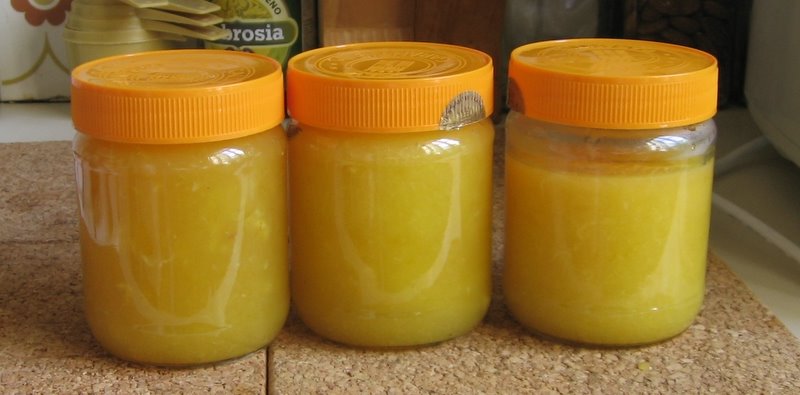
Lemon curd is a sweet preserve, used like jam on bread and butter, toast, or muffins (the English variety!) It's also good spooned into little pastry cases and baked in the oven. In some places it's known as 'lemon butter' - but this can cause confusion as lemon butter may also be a savoury, salty spread.

Lemon curd used to be time-consuming to make, needing a large pan of simmering water over a low heat, stirring constantly in a heatproof bowl. But with a microwave oven, it becomes quick and easy. It's best kept refrigerated and used within a couple of months.

I have experimented with dairy-free versions of lemon curd.  Simply substituting dairy-free spread does not work, as it makes the mixture too runny. However I have had some success with using half dairy-free spread and half refined (odour-free) coconut oil, since that solidifies even more than butter when refrigerated. Regular coconut oil gives it a strange flavour. 

A fully vegan version can be made with the zest from 4-6 lemons, 6 tbsp cornflour, 140ml water, 400g sugar, 240ml lemon juice120ml dairy-free milk, 60g dairy-free spread and 60g odour-free coconut oil. This is easier in a pan than in the microwave, as it requires making a paste with the cornflour, sugar and water which is gradually whisked in to make a paste.  Then the lemon juice is added and it needs to be brought to the boil, stirring constantly as it thickens. After that the fats and milk must be gradually stirred in until well-combined, and then the mixture poured into sterilised warm jars. If it looks too pale, about a quarter teaspoon of turmeric can be stirred in without affecting the flavour. 

05/12/2005

Mincemeat

To make about 2kg (4lb)

500g cooking apples (about 1lb, or four medium apples)
350g raisins (about 12oz)
225g currants (about 8oz)
225g sultanas (US: golden raisins)
225g shredded suet - real or veggie
225g mixed peel
225g soft brown sugar
2 lemons (or 1 orange and 1 lemon)
1/2 tsp ground mixed spice
1/4 tsp ground nutmeg
150ml brandy or whisky

Peel, core and grate or finely chop the apples, then place in a large bowl with the dried fruit (can vary dried fruit quantities so long as the total is a little over 1kg/2lb). Add the suet, sugar, grated rind and juice of lemons, and spices. Stir well. Add half the brandy or whisky and stir again. Pack loosely into jars or plastic tubs, pour over the remaining whisky or brandy, then seal. Keeps for at least two weeks, but may need to be refrigerated if kept longer in a warm climate.

- - - - - - - - - - - - - - - - - - - - - - - - - - - - - - - - - - - - - - - -

This is so easy to make, I've no idea why anybody ever buys ready-made mincemeat! You can adjust it to suit your family's preferences, and avoid unpleasant additives. If you can't find dried currants or sultanas, just use more raisins. If you prefer to use bags of ready-mixed dried fruit, do so. If you want to cut down on sugar, use less. If you want extra fruit or moister mincement, add extra grated apple. If you can't find cooking apples, use crisp eating apples such as Granny Smith. If you don't have any brandy or whisky, or prefer not to use them, just leave them out and add extra orange or lemon juice - but note that it won't keep so long, so you should definitely keep non-alcoholic mincemeat in the fridge.

Oh, and the suet... when we lived in the USA we couldn't find packets of dried suet, so we had to buy the stuff from the meat market, cook it, strain it, and chop it. What a palaver. I expect it could have been left out altogether, although the consistency wouldn't have been so soft when cooked. These days dried veggie suet is widely available in supermarkets - at least in Europe - and as it has less fat content than meat suet, and so many people are vegetarians these days, that's what I always use. This is what you should look for:


As for what you do with mincemeat, the most popular recipe is mince pies. Shortcrust pastry rolled thinly and cut to fit patty pans or cake tins, filled with a teaspoon of mincemeat, covered with another round of pastry, cooked for about 15-20 minutes. Again there are many variations: you can make the pastry with half wholewheat flour, you can glaze the tops with egg or milk, you can add extra ingredients to the mincemeat such as dessicated coconut or chopped glacé cherries...

Newest recipe

Beetroot salad

Ingredients: 250g cooked beetroot (NOT in vinegar) 50g walnuts  50g raisins 2 garlic cloves, crushed 1 tblsp mayonnaise 1 tblsp vegan yogurt...