Showing posts with label Lemon. Show all posts

22/06/2022

Lemon Slices

lemon slices
Lemon Slices
Makes about 24

Ingredients:
Base:
225g dairy-free spread
150g wholemeal flour
150g plain flour
50g icing sugar

Topping:
4 medium eggs
400g white sugar
4 tbsp white flour
120ml lemon juice
1 tsp lemon zest

Method:
Mix the base ingredients together in a bowl or food processor. It should make a dough-like ball. Press into the base of a greased or lined pan, about 32cm x 22cm and at least 3cm in depth. Use the flat of a large spoon or a spatula to ensure the mixture reaches the whole base, and flatten as much as possible. 

06/10/2008

Lemon chicken with carrots

serves 12-14 people

3kg skinless, boneless chicken thighs
4 large onions, chopped
500g carrots, chopped
500ml lemon juice
250ml tomato ketchup
200g soft brown sugar
250ml water
1 tsp salt
1/2 tsp pepper

If using a crockpot (slow-cooker), you'll need one with at least 6.5 litres capacity. Place the onions and carrots at the bottom, then place the chicken thighs over them. Mix the lemon juice, ketchup, sugar and water in a bowl, then pour over. Season. Cook for about two hours on high, then reduce to medium or low, and simmer for around 7-8 hours.

Alternatively, you could brown the onions and chicken pieces in a large saucepan first, then add the rest of the ingredients. Either simmer, covered, for about 2-3 hours, or place in a large ovenproof casserole dish in a low oven and cook for at least three hours. Exact times depend on the oven; you could reduce the time by dividing into two or three smaller dishes.

Any leftovers will freeze and re-heat very well.

- - - - - - - - - - - - - - - - - - - - - - - - - - - - - - - - - - - - - - - -

I searched for crockpot recipes online, having recently bought the Morphy Richards 6.5 litre slow cooker. One of the ones that sounded appealing was Crockpot Lemon Chicken with Carrots at the busycooks.about.com site.

Unfortunately, the quantities given were far too small for our slow cooker - it has to be at least half full, preferably more. Moreover, frozen lemonade concentrate is one of those American things that I've never seen anywhere else. However, since lemonade in American is simply lemon juice and sugar in water, I thought I might as well use freshly squeezed lemon juice, since lemons are widely available and inexpensive in Cyprus. Not having a sweet tooth, I didn't add any extra sugar to compensate.

Nor do I know how baby carrots differ from regular carrots, if at all. It took quite some time to peel and chop 500g carrots, but seemed to work.

Finally, since I don't like the feel of cornflour-thickened sauces, I left that part out of the recipe entirely. And rather than multiplying everything by three (assuming the original served four people), I looked at what felt right. This did rather fill the crockpot more than I had expected, but it didn't boil over. When it was cooked the chicken was beautifully tender, and it was more than sufficient for the eleven people sitting around our table that evening, with about three portions left at the end, which I froze.

20/02/2007

Teriyaki chicken

(serves 3-4)

500g/1lb chicken breast or fillet
1/4 cup soy sauce
1/8 cup brown sugar
1 tblsp lemon juice
2 tsp olive oil
1-2 garlic cloves, minced
1 tsp ground ginger

Mix all sauce ingredients to make marinade. About 6 hours before cooking, coat the chicken (cut into appropriate sized pieces) with the marinade and refrigerate, turning and re-coating occasionally. Half an hour before cooking, remove from the fridge. Bake, covered, for about 30 minutes in a hottish (350C/Gas 6) oven, then uncover and cook for a further 15-20 minutes.

- - - - - - - - - - - - - - - - - - - - - - - - - - - - - - - - - - - - - - - - - - - - - - - -

This is a Westernised version of a Japanese recipe. Teriyaki refers to a sweet, soy-based sauce which looks shiny when it's cooked. Turkey breast can be used in place of chicken, if wished.

I tend to add a little water during the final cooking, which probably makes it even less authentic, but I like a little sauce remaining - sometimes it can all get absorbed into the meat. We usually serve with baked jacket potatoes or potato wedges, and a couple of veggies, although it should probably be served with rice and a variety of other Japanese food.

13/04/2006

Lemon Cream Crunch

(serves 4-6) 
Base: 
100g (4 oz) butter or margarine
200g (8 oz) digestive biscuits (or American graham crackers)

Filling: 
400g (14 oz) can sweetened condensed milk 
300ml (12 fl oz) whipping cream 
3-4 small lemons, juice and grated yellow part of rind (100ml juice)

Method: 
Melt the butter in a covered container in the microwave, or very gently in a pan on the hob. Crush the digestive biscuits and stir into the melted butter. Press in the base of a greased 22cm (9-inch) flan tin or serving dish, and cool. 

Whip the cream, then fold in the condensed milk until blended. Add in the grated lemon rind and juice, stir quickly, then pour into the base. This sets extremely fast once the lemon juice has been added. Refrigerate. If you like you can sprinkle grated chocolate or sugar strands over the top before serving.
   
- - - - - - - - - - -

This is a quick, easy and highly calorific dessert, similar to what is called 'key lime pie' in the USA. I find the digestive biscuit base makes it taste a little like cheesecake, although there is no cheese and no cooking required to make it set. I used to make it over a base consisting of melted chocolate, melted butter and rice crispies. This was popular with small children but rather messy, and did not keep more than a day in the fridge as the rice crispies became soggy. 

Use unwaxed lemons, and scrub well to get rid of any dirt before grating. If the lemons are large, measure the juice before adding. About 100ml juice is about right - much more than that leaves the filling too runny, although lemony and delicious, if you like a somewhat tart lemon flavour. 

I have recently experimented with trying to make this dairy-free. While both whipping cream and condensed milk are available dairy-free, the dessert will not set unless you also use some thickener such as cornflour or tapioca starch. The reason the dairy-based recipe sets so well (and so quickly) is related to the chemical reaction of the acidic lemon juice with the proteins in the dairy products. 

My first attempt used 400ml thick canned coconut milk, mixed with 2 tbsp cornflour and 1 tbsp golden syrup, then heated in a pan, stirring, until the mixture was quite thick.  I cooled it a little, then stirred in 50ml lemon juice and 120g sweetened condensed coconut milk. I added some vanilla extract too, as the suggested recipe I found listed that, but would leave it out another time. 

If you prefer it tarter, you could leave out the golden syrup (and if not vegan could use honey instead). It worked quite well but didn't set as well as the dairy version, and the taste wasn't the same. But still, a good alternative if you want something fairly quick and lemony. 

05/04/2006

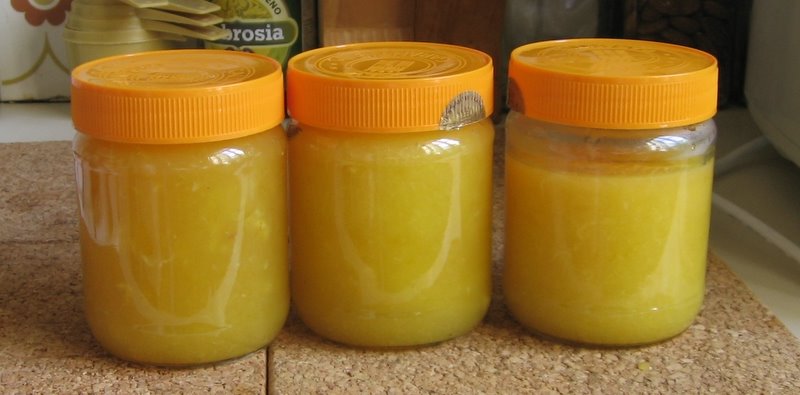
Lemon Curd

(To make about 1kg (2lb) lemon curd)

4-6 medium lemons: squeeze the juice and finely grate the yellow part of the rind
100g (about 4 ounces) unsalted butter 
450g (about 2 cups) sugar
4 largish eggs (or 6 small), beaten

Method:

Mix together the lemon rind and juice, then put with the butter and sugar in a tall pyrex or other suitable container, uncovered. There should be about 300ml lemon juice altogether, although it doesn't matter if there's a little less. If the lemons are very juicy and there is more than this, the result will be quite runny.

Microwave on full (high) for about four minutes, stirring after two minutes. Stir well to dissolve the sugar fully, and make sure the butter is completely melted. Microwave a little longer if necessary.

Add the beaten eggs, stirring in thoroughly. Microwave for a further five to six minutes, stirring well after every minute, until the mixture is thick and creamy. Do not over-cook - stop when it thickens and give a final stir.

Cool slightly, then put in clean, warm jars with lids. Refrigerate when cold.


Note: ensure the mixture comes less than half-way up the sides of your microwave container, or it will boil over! If you don't have a large enough jug, you can make it in two halves.

------

Lemon curd is a sweet preserve, used like jam on bread and butter, toast, or muffins (the English variety!) It's also good spooned into little pastry cases and baked in the oven. In some places it's known as 'lemon butter' - but this can cause confusion as lemon butter may also be a savoury, salty spread.

Lemon curd used to be time-consuming to make, needing a large pan of simmering water over a low heat, stirring constantly in a heatproof bowl. But with a microwave oven, it becomes quick and easy. It's best kept refrigerated and used within a couple of months.

I have experimented with dairy-free versions of lemon curd.  Simply substituting dairy-free spread does not work, as it makes the mixture too runny. However I have had some success with using half dairy-free spread and half refined (odour-free) coconut oil, since that solidifies even more than butter when refrigerated. Regular coconut oil gives it a strange flavour. 

A fully vegan version can be made with the zest from 4-6 lemons, 6 tbsp cornflour, 140ml water, 400g sugar, 240ml lemon juice120ml dairy-free milk, 60g dairy-free spread and 60g odour-free coconut oil. This is easier in a pan than in the microwave, as it requires making a paste with the cornflour, sugar and water which is gradually whisked in to make a paste.  Then the lemon juice is added and it needs to be brought to the boil, stirring constantly as it thickens. After that the fats and milk must be gradually stirred in until well-combined, and then the mixture poured into sterilised warm jars. If it looks too pale, about a quarter teaspoon of turmeric can be stirred in without affecting the flavour. 

04/01/2006

Lemon Meringue Pie

serves 4-6

pastry:
160g flour
pinch of salt (optional)
80g margarine
1-2 tsp cold water

filling and topping:
4 tblsp cornflour
300ml water
25g butter
grated rind and juice of two lemons
2 eggs, separated
150g sugar

Method:
Make the pastry in a food processor, or by hand (rub fat into flour then bind with water). Roll out on a floured surface, and use it to line a 20cm flan dish or shallow cake tin. Bake on its own at 190C for about 15-20 minutes.

Blend the cornflour with a little water in a small pan. Add the remaining water and butter, and bring to the boil slowly, stirring all the time. Cook, stirring, for three minutes. Remove from the heat, then add the lemon juice and rind, egg yolks, and 50g of the sugar. Pour into pastry.

Whisk the egg whites stiffly, then whisk in 50g of sugar and fold in the rest. Spread over the filling. Bake at 160C for 20-25 minutes. Serve hot or cold.

- - - - - - - - - - - - - - - - - - - - - - - - - - - - - - - - - - - - - - - - - - - - - - - - - -

Not, perhaps, the simplest of desserts but one of the most delicious, particularly with fresh lemons picked from the garden! If you buy lemons, make sure they're unwaxed (preferably organic) and wash well prior to grating the rind. Just grate the yellow bit, not any of the white pith.

The easiest way to make pastry is to throw the ingredients in a food processor, then process (with metal or plastic blade) until a ball is formed. If it doesn't go together, add a tad more cold water until it does. Too much water makes it difficult to roll, so just add tiny amounts. By hand it's much messier: use fingertips to rub the margarine in the flour gently between the fingers and thumbs, shaking every so often until the whole looks a bit like breadcrumbs. Then use a knife to mix in the water - again, add just a little at a time, and try to gather it into a ball. If it goes together, knead it slightly and it should be slightly pliable.

Of course you could always buy a 250g pack of ready-made pastry and use that instead. It won't taste so good, and may have some additives, but it's less messy than making your own.

Roll the pastry on a well-floured surface using a floured rolling-pin. Turn it so it rolls evenly and makes an approximate circle.

When whisking the egg whites to make the meringue topping, it's much easiest to use an electric whisk. If you don't have one, a hand-whisk with a handle to turn will work but takes longer. A balloon whisk without a turning-handle might possibly work but would take ages!

02/08/2005

Citrus chicken

To serve 3-4 as a main course:

3-4 chicken breasts, or about 600g chicken strips
1 tblsp olive oil
juice of 1 lemon
1 red pepper chopped
2 tblsp dark soy sauce
juice of an orange
1 tblsp honey
2 cloves garlic, crushed
1 tblsp sesame seeds

Method
If using chicken breasts, cut into thin strips. Marinade in the fridge with the olive oil and lemon juice, for a few hours, stirring occasionally.

Stir-fry the chicken for about five minutes in a fairly big saucepan or deep frying pan (or wok), using a little extra olive oil if needed. The chicken should all be cooked through. Add the crushed garlic and cook for another minute.

Mix the orange juice, soy sauce and honey together, then pour over the chicken, and sprinkle on the sesame seeds. Continue cooking for about ten minutes, stirring to ensure the chicken is well-coated.

Serve over rice.

- - - - - - - - - - - - - - - - - - - - - - - - - - - - - - - - - - - - - - - - - - - - -

Notes:
While the marinading is nice, it isn't essential. I often forget, and nobody notices the difference.

Cutting fresh chicken breasts into strips isn't all that easy; use a fork to hold it and a sharp serrated knife. I find the simplest method is to start with frozen chicken breasts, thaw for a couple of hours (or a couple of minutes in the microwave) until it's the consistency of ice-cream. Then it slices much more easily.

Juice from fresh citrus fruits is of course best, but it's entirely possible to use orange juice from a packet, and lemon juice from a jar. So long as they're pure juice with no additives.

Don't worry if the garlic pieces turn light blue while cooking! I found it very disturbing the first time that happened, but research taught me that garlic will sometime go blue in the presence of acids such as lemon juice. By the time you've added the soy sauce, the blue colour should mostly have vanished.

If you forget the sesame seeds it doesn't matter, but they do add a pleasant crunch.

Lemonade (lemon squash)

To make about 3 - 3.5 litres of concentrate:

10-15 medium lemons, unwaxed and thoroughly washed
1kg sugar (2.2lb)
>water for cooking and cooling

Method:
Use a potato peeler or lemon parer to remove just the outer yellow part of the rind of about ten lemons. Place these yellow parings in a large saucepan with about 500ml water, or a bit more. Bring to the boil then gently simmer for about ten minutes. The water should become yellow and smell of lemon as the oils are released.

Add the sugar, and stir gently over the heat until it's all dissolved. Turn off the heat and leave to cool slightly.

Now cut the lemons in half and squeeze out the juice. This is easiest with an electric juicer or suitable food processor attachment. Keep squeezing lemons until you have about a litre (which is roughly an American quart) of juice, including the pips and 'gunk'. With reasonable sized lemons each one yields around 100ml; with smaller ones you'll need to squeeze more. Occasionally when our home-grown lemons have been small, I've needed 20 or more to produce a litre of juice.

Add all the juice (and gunk) to the pan, stir roughly, and leave to cool.

Use a nylon sieve to strain the lemonade over a large jug, and decant into bottles. Add extra water as necessary to squeeze the last of the lemonade out of the bits left in the sieve, and to make the resulting lemonade up to about 3 litres or a bit more, depending on the size of your bottles.

Put straight in the fridge. To use, dilute as necessary with cold water. I usually put about 2cm lemonade in the bottom of a tall glass and fill up with water. Others might have more of the concentrate.

- - - - - - - - - - - - - - - - - - - - - - - - - - - - - - - - - - -

Notes:

This is a great recipe for those in warm countries with a glut of lemons on their trees. Or if you can find unwaxed lemons at the market for a good price. Alas, it would be terribly expensive if you bought organic shrink-wrapped lemons at one of the big UK supermarkets. You'd be better off just buying cartons of fruit juice.

But it's still a great recipe, even though the amount of sugar needed is rather frighteningly high. You might get away with less if your family doesn't have a particularly sweet tooth, but experimentation showed this to be about the right amount for us. It's much like British-style lemon squash of the high-juice variety, with no artificial additives at all. Or like the lemonade that can be made from frozen concentrate in the USA. It does need to be refrigerated after making, and won't last more than about ten days at most, so make less if you don't drink much of this kind of thing.

If, like us, you find you have far too many lemons to use in the spring, try freezing some. I prepare the yellow outer parings and put them in a freezer bag, then squeeze a litre of juice and put it in a suitable container. This is very useful for the summer when (a) we don't have any lemons growing and they're not widely available in the supermarkets (b) it's far too hot to do much in the kitchen anyway.

Newest recipe

Beetroot salad

Ingredients: 250g cooked beetroot (NOT in vinegar) 50g walnuts  50g raisins 2 garlic cloves, crushed 1 tblsp mayonnaise 1 tblsp vegan yogurt...